
Nepal–Tibet Border: A Journey to the Roof of the World
Where the mighty Himalayas rise into the clouds, the Nepal–Tibet border offers one of the most extraordinary travel experiences in Asia. It is a place where dramatic mountain landscapes, ancient cultures, Buddhist traditions, and historic trade routes come together.
For travelers heading from Nepal toward Tibet, crossing this frontier is more than simply moving from one country to another. It is the beginning of an unforgettable Himalayan adventure.
A Gateway Between Two Worlds
The Nepal–Tibet border lies along the Himalayan range and connects Nepal with the Tibetan Autonomous Region of China. For centuries, these mountain passes have played an important role in trade, pilgrimage, and cultural exchange.
The landscape is spectacular. Snow-covered peaks, deep valleys, rushing rivers, rocky cliffs, and high-altitude plateaus create scenery that changes dramatically as you travel farther north.
One of the best-known border crossings is the Rasuwagadhi–Kerung (Gyirong) crossing, which has become an important gateway for travelers and trade between Nepal and Tibet.
The Journey to the Border
Traveling toward the Nepal–Tibet border can be an adventure in itself. Roads wind through steep Himalayan terrain, passing traditional villages, forests, waterfalls, and mountain valleys.
As you climb higher, the scenery gradually transforms. Lush green landscapes give way to rugged mountains and colder, drier terrain. The dramatic contrast makes the journey particularly memorable for photographers and adventure travelers.
The route also provides opportunities to experience rural Himalayan life, where traditional architecture, prayer flags, monasteries, and mountain communities form an important part of the landscape.
Culture and Spirituality
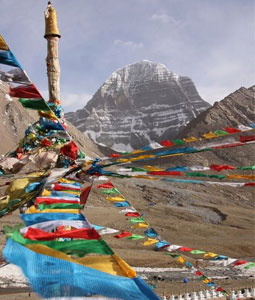
The region around the border is deeply influenced by Tibetan Buddhism. Prayer flags flutter in the mountain wind, mani stones line paths, and Buddhist monasteries can be found throughout the Himalayan region.
For many visitors, the cultural experience is just as meaningful as the scenery. The border region reflects centuries of interaction between Nepali and Tibetan communities, with shared traditions visible in architecture, religion, food, and everyday life.
Travelers heading onward into Tibet may eventually encounter some of the world’s most significant Buddhist and cultural destinations.
A Route Toward Mount Everest
For adventure seekers, the Nepal–Tibet border can also be part of a journey toward the northern side of Mount Everest.
The Tibetan side offers a completely different perspective of the world’s highest mountain. Instead of the lush valleys found in parts of Nepal, travelers encounter vast high-altitude landscapes and expansive Himalayan views.
For those fascinated by mountains, the transition from the Nepalese foothills to the Tibetan plateau is an experience that is difficult to describe in words.
Things to Keep in Mind
Travel in the Nepal–Tibet border region requires preparation. Border procedures, permits, transportation arrangements, and entry requirements can change, so travelers should check the latest official requirements before departure.
Altitude is another important consideration. Tibet is a high-altitude destination, and visitors should allow time to acclimatize and take appropriate precautions.
Weather can also change quickly in the Himalayas. Good clothing, reliable transportation arrangements, travel insurance, and an experienced local guide or tour operator can make the journey considerably easier.
Best Time to Visit
The ideal travel period depends on your itinerary and the specific areas you plan to visit. Generally, the spring and autumn months are popular because of relatively favorable weather and clearer mountain views.
However, conditions in the Himalayas can be unpredictable, and border crossings may be affected by weather, road conditions, or administrative restrictions. Checking current conditions before traveling is essential.
Why Visit the Nepal–Tibet Border?
The Nepal–Tibet border is not simply a point on a map. It represents a meeting place between landscapes, cultures, and civilizations.
From the winding mountain roads of Nepal to the immense Tibetan plateau, the journey offers breathtaking scenery and a glimpse into Himalayan traditions that have survived for generations.
Whether you are interested in mountain photography, Buddhist culture, adventure travel, or simply experiencing one of the world’s most remarkable landscapes, the Nepal–Tibet border provides the beginning of an unforgettable journey.
The Himalayas do not merely separate Nepal and Tibet—they connect two extraordinary worlds.